6 Marketing Strategies for Building a High-Growth Women’s Longevity Clinic in 2026
Master women’s health marketing in 2026. Discover 6 proven strategies to build a high-growth longevity clinic in Australia while ensuring 100% clinical compliance.
.png)
For decades, the Western longevity industry has been marketed through a masculine lens. Cold plunges. Fasting protocols. Testosterone optimisation. Biohacking dashboards built on male physiology.
Meanwhile, women, who statistically live longer than men, were offered vague “self-care” advice and reactive, symptom-based treatments.
That imbalance is shifting. Demographics, healthcare engagement, and consumer expectations are converging at scale. For wellness clinics, longevity doctors and health practitioners in Australia, the rise of the Women’s Longevity Economy represents one of the most significant strategic opportunities of the decade.
What is the Longevity Economy?
The Longevity Economy is a term used by economists and global institutions to describe the economic and social systems that enable people to live longer, healthier, and financially resilient lives as populations age.
According to the World Economic Forum, the number of people aged over 60 is expected to more than double to 2.1 billion by 2050. In Australia, women are leading this shift. Living longer on average, they are becoming the most influential force in healthcare spending. Women aged 45–60 in affluent Australian hubs like Sydney, Melbourne and Brisbane often control a significant share of household spending and sit at the peak of their decision-making influence.
Commercially, the global menopause market is expected to grow to US$26.21 billion by 2030 (Menopause Report 2026, The Business Research Company). It is becoming a booming sector attracting significant capital from leading global investors.
To capture this shifting market and build a brand that resonates with the modern midlife consumer, here are the 6 key marketing strategies your clinic needs to master in 2026:
1. Bridging the Trust Gap with Biological Literacy
The current landscape is defined by fragmented, exaggerated and often distrusted information.
In Australia, the ABC reported that more than one in three women felt their health concerns had been dismissed by a GP. Combined with a flood of misinformation from social media influencers, it is creating a significant trust gap.
Forward-thinking Australian health clinics can step into this gap by providing:
- Biological literacy: Explaining the why behind hormonal and physiological shifts.
- Genuine care: Validating the lived experience of perimenopause and beyond.
- Clear pathways: Moving the patient from "What is wrong with me?" to "What do I do next?"
2. Intent-Based Messaging (Symptom vs. Pathway)
Positioning your clinic requires a deep understanding of user intent. You may offer the best clinical care in Australia, but without the right language, it is hard to cut through a crowded market.
Matching Language to Intent:
- Symptom-Led (High Urgency): For users searching for immediate relief, simplicity converts. Use terms like “menopause support” or “evidence-based hot flush treatment.”
- Pathway-Led (Premium/Longitudinal): For long-term health, framing increases perceived value. Use terms like “Hormonal & Metabolic Reset,” “Longevity Program,” or “Women’s Vitality Plan.”
3. Answering the "Conversion Questions"
In 2026, clarity is the ultimate conversion lever. When a patient is time-poor or frustrated, your marketing must answer:
- What is included in the assessment?
- What biomarkers do you measure? (e.g., DEXA scans, inflammatory markers, hormonal profiling)
- How long does the initial phase take?
- How much does it cost?
By offering tangible entry points, like a “Menopause Medical Assessment” or “Metabolic and Hormonal Profiling”, you reduce uncertainty and provide the safety and realistic expectations this audience demands.
4. Marketing for Psychographics, Not Just Wealth
It is tempting to frame this audience as exclusively affluent, but that is strategically reductive. The real commercial opportunity lies in psychographics. This audience values:
- Evidence over trends
- Structured plans over vague advice
- Expertise over influencer culture
- Time efficiency and long-term outcomes
Clinics that articulate a clear pathway consistently outperform brands selling generic wellness services with vague promises.
5. From "Anti-Ageing" to "Power Ageing"
Language shapes perception. Traditionally, “anti-ageing” implies decline, fear, and concealment. The brands winning the Australian market in 2026 are reframing midlife as “power ageing.” It is about strength, agency, capability and empowerment.
However, your claims must be substantiated. With the media describing the current landscape as a “menopause gold rush,” (The Guardian), clinics must avoid the hype and focus on transparent, evidence-based communication.
6. Navigating AHPRA and TGA Compliance
In Australia, clinic marketing must align strictly with regulatory frameworks. AHPRA and the TGA have increased scrutiny on health services, particularly regarding social media claims and testimonials.
Rather than marketing a specific medicine or a “cure,” successful Australian clinics focus their brand on:
- The assessment: Comprehensive diagnostic protocols.
- Care model: Multidisciplinary support.
- Clinical governance: Safety and practitioner expertise.
By marketing the system of care rather than the therapeutic good, you build a brand that is both compliant and authoritative.
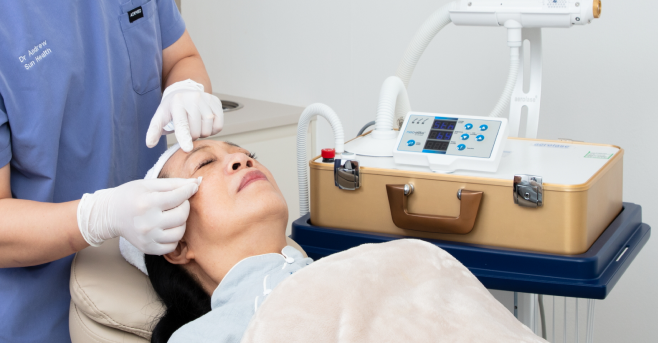
Case Study: ReCo x Sun Health Clinic (Sydney)
The Challenge
When Sun Health Clinic in Sydney partnered with ReCo, the immediate hurdle was brand positioning. In a saturated Sydney market, they needed to move beyond being "just another clinic" and clarify exactly how they served their patients while maintaining 100% compliance with strict AHPRA standards.
Our Approach
- Audience insight: We began with deep research into the patient base, identifying that the vast majority of their high-value clients were women navigating the complexities of perimenopause and menopause.
- Messaging overhaul: We moved away from generic "wellness" clichés. Instead of a cold, purely clinical tone, we reframed the patient journey with clarity and care. By targeting specific symptoms as a "cut-through" strategy, we made the clinic’s expertise feel accessible and empathetic rather than intimidating.
- Compliance-first collaboration: Working directly with the Sun Health medical team, we audited and refined all digital assets to ensure they met TGA guidelines without losing their marketing "punch."
The Result: A 90-Day Lead Generation Engine
Through rapid experimentation and data-driven testing, we built a robust lead generation system in just 90 days. By identifying exactly what messaging resonated with the target audience, we successfully bridged the gap between online interest and qualified doctor consultations.
Learn more from our case study.
Strategic Takeaways for 2026 Growth
To succeed in the Women’s Longevity Economy, Australian clinics must move beyond scattered services and toward structured health journeys:
- Focus on psychographics: Target women who value evidence, efficiency, and long-term outcomes.
- Lead with authority: Replace "spa aesthetics" with clinical excellence and female strength.
- Operationalise compliance: Build systems that align with AHPRA/TGA from day one.
- Scale with systems: Move from "appointment booking" to "longitudinal care management."
Q&A for Longevity Clinic Founders & Health Practitioners
What is the "Women’s Longevity Economy" and why is it a 2026 priority?
It’s a global shift away from reactive "menopause management" toward proactive, lifelong health optimisation. In 2026, women are the primary drivers of health spending in Australia. They aren't just looking for hot flush relief; they are investing in bone density, metabolic resilience, and cognitive health to power the next 40 years of their lives.
How do we market menopause services without breaching AHPRA or TGA rules?
Focus on "Service over Substance." Instead of promoting a specific medicine or "cure," market your Clinical Pathway. Position your brand around comprehensive medical assessments and multidisciplinary care models. This builds authority while keeping your clinic strictly compliant with Australian law.
What is the biggest mistake clinics make when targeting midlife women?
Falling for "Meno-washing" or using "Spa Clichés." The 2026 consumer is highly biologically literate and sceptical of vague wellness promises. She wants evidence, data-driven insights (like DEXA or biomarker tracking), and a structured plan that respects her intelligence.
Should my clinic use "anti-ageing" or "longevity" in its messaging?
In 2026, "Anti-Ageing" feels dated and fear-based. The winning clinics have shifted to "Power-Ageing" or "Healthspan Optimisation." This reframes midlife as a period of capability. Using longevity-focused language attracts a higher-intent patient looking for a long-term health partner.
Partner with ReCo for Your Clinic’s Growth
The Women’s Longevity Economy is here. If you are building a health or wellness brand in Australia and want to position it strategically, our Sydney-based team specialises in building sustainable, compliant growth systems for ambitious founders.
Danling Xiao is an award-winning entrepreneur and Strategic Director at ReCo. With over a decade of experience spanning brand strategy, customer insight and content marketing, she helps founders and leadership teams navigate complex, highly regulated markets to make confident, high-stakes decisions.
Her approach sits at the intersection of creativity, innovation and commercial impact. Danling is a champion for a new era of creative entrepreneurship, one where brands grow through deep customer understanding, cultural relevance and ethical innovation.
You have the vision. We help you bring it to the world.
Dear founders, innovators and leaders,
You have a product backed by research. An innovation that breaks the norm. Expertise that serves humanity.
But you need:
- A brand that reflects your offer authentically and truthfully
- Leadership that people trust and look up to
- Engagement that inspires and earns loyalty
That's what we do.
ReCo is a design and marketing consultancy for organisations with knowledge or innovation to bring to the world. Using audience insights, brand experience and ethical AI systems, we build brands that people trust and choose.